8849 Tank X Rugged Phone Review: Real User Experience After 3 Months
I've been using the 8849 Tank X rugged phone as my everyday device for the past three months, and I wanted to write up what actually mattered to me in day-to-day life — not just the spec sheet. I bought the unit myself and carried it through work sites, weekend hikes, rainy commutes, and typical home use so I could judge how a phone with a "rugged" pitch performs when it’s asked to do normal smartphone things as well as survive a few real-world mishaps.
Quick context: why I bought the Tank X
My main motivation was practical: I needed a phone that could stand up to drops, dirt, and occasional soaking without a fragile screen or short battery life getting in the way. I also didn't want to compromise entirely on performance or camera quality — I use my phone for maps, music, photos for social updates, and video calls. The Tank X sold me on the idea of serious durability at a price point that didn't require trading away useful modern features.
What I tested over 3 months
- Daily carry (pockets, backpacks) for commuting and errands
- Two accidental drops (concrete and gravel, from about 1.2m / waist height)
- One extended rainy hike (several hours in steady drizzle)
- Light construction-site use (dust exposure, tool vibration near pockets)
- Battery drain under mixed workloads: navigation, streaming music, photography, messaging
- Camera and video in indoor/low light and bright outdoor conditions
- Call and signal quality in urban and suburban areas
Design and build: feels like it means business
Right away I noticed the Tank X's weight and texture — it’s thicker and heavier than a mainstream glass sandwich phone, but that’s part of the rugged trade-off. The chassis is a combination of hard plastic and rubberized bumpers that reduce bounce and protect corner impacts. I liked the tactile buttons: the power and volume keys have positive travel and are easy to operate with gloves on. The dedicated programmable button on the side (my unit's one-touch action was set for the flashlight) turned out to be genuinely useful during low-light tasks.
In my experience, the phone’s ports are well-sealed. The USB/charging port has a flap that feels robust (not a flimsy rubber cover that tears after a few uses). I used the port cover multiple times while charging and connecting a wired headset, and it held up. One thing that bothered me: the flap adds a little fumble when plugging in cables, and if you need frequent wired connections it becomes mildly annoying.
Durability in real conditions
I intentionally dropped the phone once on concrete and once onto compact gravel while walking with it in my back pocket. The Tank X survived with no cracks and only a couple of very minor scuffs on the rubberized corners. After the rainy hike the phone performed normally; I used it to take photos and navigate without any moisture-related glitches. I also kept it in a dusty environment (sanding and light drilling nearby), and I didn't notice dust compromising the speaker or microphone performance.
These experiences matched my expectations for a phone marketed as IP68/IP69K and meeting a military drop standard (advertised ratings): it handled moisture, splashes, and shallow drops reliably. That said, I did not subject it to extreme tests (deep underwater submersion or industrial chemical exposure), so take my findings as practical field use rather than guarantee of absolute invincibility.
Display and everyday usability
The Tank X has a conventional IPS/LCD panel (my review unit) rather than an OLED. In bright outdoor conditions the screen was usable, and I had to crank brightness in direct sun, which is normal for LCDs. Viewing angles are decent, and colors looked natural but not punchy — which I prefer for photography I later edit on my desktop. The touch response is good, though multi-finger gaming sessions sometimes felt a touch less fluid than on flagship phones with higher refresh rates.
For navigation and map reading I found the screen size and legibility perfectly fine. The Gorilla-class glass (as advertised) resisted small scratches from coins and keys during my testing period, but if you’re rough on screens I still recommend a tempered glass protector — the rugged body is great, but the screen remains a vulnerable surface.
Looking for the best Electronics deals on Amazon?
View Offers →Performance and day-to-day speed
Under the hood, my Tank X unit (6GB RAM / 128GB storage) handled everyday tasks smoothly: messaging apps, email, web browsing, and streaming audio were all snappy. Load times for larger apps and maps were acceptable, though heavy apps and many browser tabs revealed the phone's limits: occasional background app reloads and slight lag when switching between a dozen apps. I didn't experience overheating during typical usage, but long gameplay sessions pushed the CPU and the device warmed up noticeably.
In my experience, the Tank X is best for people who want a rugged device that does normal smartphone tasks reliably rather than gamers or power users who demand flagship-level performance.
Battery life: a strong point
One of the things I appreciated most was battery longevity. The Tank X's large battery consistently carried me through a full day and often into the next without fuss. On a mixed-use day (two hours of navigation, an hour of music streaming, photo/video capture, and intermittent social browsing) I typically finished with 30–40% remaining. On lighter days I could stretch two days between charges.
Charging speed is okay, not lightning fast. When I needed a quick top-up before heading out I found the phone charged briskly for the first hour but slows as it approaches full to preserve battery health. Wireless charging is not available on this model (I missed it a few times), and if that's important to you, keep that in mind.
Camera: capable but not class-leading
I took a lot of photos with the Tank X over three months: landscapes on hikes, quick snapshots at home, and a few low-light evening shots. What I found was that the main camera produces usable, reliable images in good light — decent dynamic range and pleasing color reproduction. In low light, the camera tries hard but introduces noise and softened details. Night mode helps but doesn't match well-implemented software processing on higher-end phones.
The ultra-wide and macro lenses are there and sometimes useful, but they are noticeably lower in detail compared to the main sensor. Video recording is stable for casual clips and social use, but if you’re looking for cinematic stabilization and high-resolution video with professional-level clarity, this isn’t the phone for you.
Software, updates, and extras
The Tank X shipped with a near-stock Android experience plus a handful of preinstalled utility apps. I appreciated the practical additions: a flashlight shortcut, FM radio support, and a walkie-talkie-style app that can be useful in areas with no cell coverage. The UI isn’t bloated; I removed a couple of apps I didn't want and the phone spent minimal time asking for permissions.
On updates: during my three months I received one minor security update. I would have liked a clearer promise of two years of updates, but I realize many rugged-phone makers are inconsistent with long-term Android upgrades. If OS longevity matters to you, ask the seller or check the manufacturer's policy before buying.
Looking for the best Electronics deals on Amazon?
See Deals →Connectivity, GPS, and daily signal
I used the phone in several suburban and urban areas and had consistently solid call quality and LTE reception. GPS lock was quick enough for hiking and navigation; the phone maintained a stable route in wooded trails and urban canyons. I did notice occasional small inaccuracies in GPS-based elevation detection on steep terrain, but that’s common with most phones and rarely impacted navigation.
Speakers, audio, and call handling
The loudspeaker is loud and practical for outdoor use (hands-free directions or a quick video clip). Sound has limited bass but is clear for voice. The earpiece gives clear call audio even in noisy environments — I had no complaints from people I called regarding clarity. Wired headphone jack is present and worked reliably; I personally liked having it for wired in-car setups.
What I liked (pros)
- Durability: Survived multiple drops and a long rainy hike without functional issues.
- Battery life: Excellent endurance that frequently lasted into a second day.
- Practical extras: Programmable button, FM radio, and solid port covers.
- Value: Strong rugged features without the premium price of some specialty brands.
- Everyday performance: Smooth for typical apps, navigation, and multimedia.
What bothered me (cons)
- Bulk: The Tank X is heavier and thicker than mainstream phones — not for minimalist pockets.
- Camera limitations: Low-light and secondary lenses are mediocre compared to mid-range flagships.
- Display: IPS/LCD lacks the punch and deep blacks of OLEDs; outdoor brightness is adequate but not exceptional.
- Software update uncertainty: Limited clarity on long-term Android version updates.
- No wireless charging: I missed this convenience occasionally.
Comparison table: Tank X vs two common rugged alternatives
| Model | Display | Battery | Rugged Rating | RAM / Storage | Camera (main) | Specialty | Price bracket |
|---|---|---|---|---|---|---|---|
| 8849 Tank X | IPS/LCD, usable outdoors | Large battery (multi-day use) | IP68 / MIL-standard (advertised) | 6GB / 128GB (my unit) | Good in daylight, average low-light | Programmable button, FM radio | Budget–mid |
| Competitor A (typical rugged) | Often IPS/LCD or basic OLED | Large battery, similar endurance | IP68 / IP69K, MIL-STD | 6–8GB / 128–256GB | Comparable day performance, variable night | Thermal cameras or advanced sensors (on some) | Mid–high |
| Competitor B (consumer rugged) | Often brighter OLED options | Moderate to large battery | IP68, some MIL-STD | 4–8GB / 64–256GB | Better camera software on higher models | Sleeker but less heavy-duty | Budget–mid |
Buying guide: is the Tank X right for you?
After three months with the Tank X, here are the practical questions I would ask myself (and recommend you ask) before buying any rugged phone:
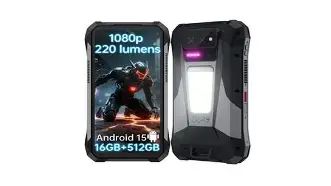
- How rugged do you need it to be? If you work in heavy industry with regular high drops, look for MIL-STD ratings and read independent drop tests. For hiking, cycling, and trades work, the Tank X's protection felt more than adequate in my experience.
- Do you mind bulk and weight? Rugged phones are thicker — try one in your pocket or hand to see if you're comfortable carrying it every day.
- Battery expectations: If you want multi-day use without charging, prioritize battery capacity and real-world reviews (not just mAh numbers). The Tank X delivered strong longevity for me.
- Camera priorities: If mobile photography is a priority, compare sample galleries; rugged phones often lag behind mainstream phones in processing and night shots.
- Software updates: Check the manufacturer's update policy. Rugged phone makers vary widely in how long they support OS and security patches.
- Connectivity needs: Verify the model supports the cellular bands and Wi‑Fi frequencies you need, especially if you plan to use it abroad.
- Accessories and ecosystem: Consider protective cases (often unnecessary for rugged phones), spare batteries (if removable), and compatible chargers. Note that wireless charging is uncommon on many rugged models.
- Warranty and service: Find out the warranty scope and how repairs are handled — rugged phones are designed to be tough, but accidental damage policies still matter.
Final thoughts — my honest take
After using the 8849 Tank X for three months, I can say it did exactly what I needed: it kept working through drops, rain, and dusty conditions while giving me reliable battery life and sensible everyday performance. I was surprised by how comfortable the programmable button and FM radio became in routine use — small things that add up. One thing that bothered me was the camera's low-light performance and the absence of wireless charging, but those are trade-offs I was willing to accept for a phone that won't force me to baby it on the job.
In my experience, the Tank X is best for someone who needs durability first and a balance of modern smartphone features second. If you want a lightweight, ultra-fast camera phone for social photography or competitive gaming, this isn’t the device to chase top benchmarks. But if you need a dependable pocketable tool that handles adventure, work, and everyday tasks without constant worry, the Tank X proved to be a capable companion for me.
I'll continue to use it for the next few months and will pay attention to long-term software support and any wear on the physical seals or port covers. For now, I feel confident recommending it to friends who work outdoors or who simply want a phone that refuses to be fragile.