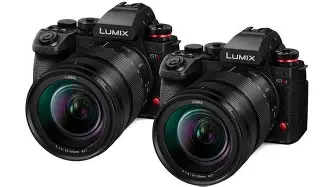
Akaso 360 vs Panasonic Lumix S1 Ii: Which Should You Buy?
I've been using both the Akaso 360 and the Panasonic Lumix S1 Ii for several months, switching between them depending on the project. One sits in my pocket for social clips and experimental shots; the other is my go-to when image quality and control really matter. In this article I’ll walk through my hands-on experience with each camera, explain what I appreciated and what disappointed me, show a direct comparison that helped me choose the right tool for the job, and share a buying guide so you can decide which is best for you.
Introduction: why I bought both
I bought the Akaso 360 because I wanted a lightweight, easy way to capture immersive moments while traveling and during family gatherings. The idea of capturing everything around me and later reframing or creating immersive clips appealed to my social workflow. I bought the Panasonic Lumix S1 Ii because I needed a high-performance, full-frame camera for weddings, landscapes, and low-light work where detail matters and I wanted the flexibility of an interchangeable-lens system.
After months of using each camera in real-world scenarios—travel, hiking, indoor events, timelapses, and short documentary-style videos—I learned each device’s strengths and shortcomings. Below I share those experiences in detail so you can pick the camera that matches how you shoot.
Akaso 360 — My experience and analysis
What I found was that the Akaso 360 is a camera built for immediacy and experimentation. I would slip it into a backpack pocket and use it during short hikes or family hangouts without thinking about lens choices, exposure settings, or whether I’d have to switch cameras for a specific angle. In my hands it’s liberating: point it into the scene, press record, and you get a full spherical capture that you can crop later.
Here are the most important things I noticed after months of use:
- Workflow freedom: I loved being able to reframe 360 footage in post. There were many times I didn’t know where the action would be, and later I could choose the best angle without having missed a shot.
- Portability and simplicity: It’s tiny and unobtrusive. I felt comfortable leaving it out on a picnic table or mounting it to a backpack without worrying about it getting in the way.
- Stitching artifacts: One thing that bothered me was visible stitching in some scenes, especially where foreground objects were close to the camera. I noticed seams when branches or people crossed the stitch lines, and that required extra cleanup in editing.
- Low-light limits: In dim interiors and at night the Akaso struggled compared to larger-sensor cameras. Noise rises quickly and details blur at higher ISO—so for night sky or dimly lit events I often resorted to the Lumix.
- Battery and heat: For long sessions I had to swap batteries or carry a small power bank; continuous 360 recording drained battery faster than I expected. On hot days, I noticed the camera became warm after extended recording sessions.
- Easy social sharing: The companion app made quick edits and exports simple. For quick social clips or reframed short videos, I could produce something attractive from phone alone in a few minutes.
Akaso 360 pros & cons
- Pros
- Extremely portable and easy to use
- Immersive capture—reframing after the fact is powerful
- Good for candid, environmental shots and social content
- App-based editing is quick for short clips
- Cons
- Visible stitching artifacts in tricky scenes
- Limited low-light performance and higher noise
- Battery life can be limiting for long sessions
- Audio quality from onboard mics is serviceable but not great
Panasonic Lumix S1 Ii — My experience and analysis
Using the Lumix S1 Ii after spending time with the Akaso 360 felt like moving from a sketch pad to a fully equipped studio. In my experience, the S1 Ii delivers the sort of image quality, dynamic range, and control that make it a camera I’m comfortable bringing to paid jobs. It’s heavier and more deliberate to use, but that investment in handling pays off in the final images.
Here’s what stood out during my prolonged use:
- Image quality and dynamic range: I noticed clearer detail in shadows and highlights, especially when shooting landscapes and portraits in mixed lighting. The files tolerate exposure adjustments and color grading without falling apart.
- Build and ergonomics: The S1 Ii feels solid and well-balanced with larger lenses. I appreciated the deep grip and physical controls—on busy shoots I could change settings quickly without diving into menus.
- Stabilization: In-body stabilization made a real difference handheld, especially for run-and-gun filming and low-shutter handheld shots. I relied on IBIS for many handheld timelapses and for shoot-and-walk footage.
- Lens ecosystem: Being able to choose lenses was a huge advantage. I switched between a wide-angle for landscapes and a medium-tele for portraits and weddings, and each lens changed the camera’s personality entirely.
- Size and weight: One thing that bothered me was the bulk when hiking long distances—carrying a camera plus two heavy lenses turned day hikes into a workout. For minimalist trips I’d take the Akaso instead.
- Complex menus and customizations: There’s a learning curve. I found myself spending time customizing buttons and menus to speed up my workflow; this paid off, but it’s not an ideal out-of-the-box simplicity for casual shooters.
- Battery life and accessories: Battery life was decent but heavy use of stabilization and video recording will eat through power; I always carried spares. I appreciated features like weather sealing and robust controls for outdoor shoots.
Panasonic Lumix S1 Ii pros & cons
- Pros
- Superior image quality and dynamic range
- Strong in-body stabilization for handheld work
- Excellent build quality and weather sealing
- Interchangeable lens flexibility—huge creative range
- Cons
- Bulky and heavier than consumer-level cameras
- More complex menu system and setup time
- Higher cost and ongoing lens investment
- Not as convenient for casual or social-only content
Side-by-side comparison
Below is a practical comparison table that reflects how these cameras behaved for me on real shoots. Rather than quoting raw spec sheets, I focused on the things that mattered in everyday usage.
| Category | Akaso 360 (my experience) | Panasonic Lumix S1 Ii (my experience) |
|---|---|---|
| Intended use | Casual immersive capture, social clips, 360 tours | Professional photo/video work, landscapes, portraits |
| Portability | Ultra-portable, pocketable | Large and heavy with lenses |
| Image quality | Good for social/web; soft in low light | High-quality files, strong low-light and dynamic range |
| Stabilization | Electronic stabilization useful for casual clips | Strong in-body stabilization, reliable for handheld |
| Workflow | Fast mobile workflow; reframe in app | Detailed, camera-to-computer workflow with advanced editing |
| Audio | Onboard mics are passable; external options limited | Good audio options with external mics and adapters |
| Price & value | Affordable; great value for immersive capture | Premium price; value depends on professional needs |
| Best for | Travel vloggers, social creators, immersive experiences | Professionals, serious enthusiasts, commercial work |
When to choose the Akaso 360
In my experience, reach for the Akaso 360 when:
Looking for the best Cameras & Photography deals on Amazon?
View Offers →- You want a no-fuss camera to capture immersive moments without worrying about framing.
- Portability and spontaneity are more important than ultimate image quality.
- You create a lot of social content and like the ability to reframe after shooting.
- You want an affordable way to experiment with 360 workflows and storytelling.
I found it perfect for short hikes, city walks, family get-togethers, and quick vacation clips. If I knew I needed a high-resolution print or a clean night-time video, I’d switch to the S1 Ii, but for everyday sharing and exploratory creative work, the Akaso became my go-to.
When to choose the Panasonic Lumix S1 Ii
In my experience, choose the S1 Ii when you need control, quality, and lens flexibility:
- You shoot assignments where image fidelity, dynamic range, and low-light performance matter.
- You want the ability to use different lenses to craft your images.
- You don’t mind carrying a larger kit in exchange for better control and professional features.
- You value features like robust build quality and stabilization for handheld work.
For weddings, landscapes I plan to print large, or client video work, the S1 Ii delivered results that the Akaso couldn’t match. The files were cleaner, the color grading held up, and the overall experience felt professional.
Buying guide: what to consider before you buy
Here are practical decisions I made that may help you choose:
1. Define how you’ll use it
Ask yourself whether you need immersive content or maximum image quality. I kept a simple rule: if the project will end up on social stories, the Akaso was usually enough; if it was a paid job or a project I might print, the S1 Ii was the only option.
2. Think about weight and routine
I underestimated how often I’d reach for the lighter camera. On days I wanted to travel light, the Akaso went with me; the S1 Ii came out for planned shoots. Consider how often you’ll carry a heavy camera and whether you have the stamina for long days with it strapped to your neck.
3. Consider lenses and long-term cost
With the S1 Ii you’re buying into a lens ecosystem. In my experience that’s a huge advantage creatively but it’s also an investment. If you’re starting and budget is tight, think about whether you’re ready to expand the kit.
4. Workflow and editing
If you prefer quick turnaround and phone-based editing, the Akaso’s app-centric workflow is a win. If you enjoy grading RAW files and using a desktop edit suite, the S1 Ii will reward you with higher-quality source material.
Discover deals on Cameras & Photography — updated daily.
See Deals →5. Audio needs
I learned to plan for better audio with both cameras. The Akaso’s onboard audio was serviceable for ambient sound and short clips, but I used an external recorder when clarity mattered. The S1 Ii offered better options for external microphones, which changed how I approached interview-style shoots.
6. Future-proofing and resale
High-end mirrorless bodies tend to hold value longer than small consumer 360s. If resale value and long-term use are concerns, that was part of my calculus when investing in the S1 Ii.
How I actually use both together
One practical approach I adopted was to treat the cameras as complementary. On a wedding shoot I used the S1 Ii as my main camera for portraits and ceremony coverage, and I set the Akaso 360 in a corner of the reception room to capture immersive atmosphere and candid moments throughout the night. The 360 footage gave me creative cutaways and behind-the-scenes material that felt impossible to stage, while the Lumix provided the deliverables clients expected.
For travel I usually carried the Akaso in a small pouch and the Lumix in my backpack. When time was short I shot the Akaso; when I found a scene that deserved a proper photograph, I unpacked the S1 Ii and a chosen lens.
Final thoughts and recommendation
After several months of real-world use, my conclusion is simple: buy the Akaso 360 if you want spontaneity, discovery, and social-ready immersive content without a heavy investment in gear or learning curve. It’s fun, portable, and surprisingly powerful for quick turnaround work. I was surprised by how often its “capture everything” philosophy saved me from missing interesting moments.
Buy the Panasonic Lumix S1 Ii if you need professional-grade images, interchangeable lenses, and the confidence that your files will hold up to heavy editing and printing. In my experience the S1 Ii became a workhorse for assignments and a camera I trusted to deliver client-ready results under varied conditions. One thing that bothered me was the weight on long hikes, but the payoff in quality and control typically justified the extra effort.
Ultimately, these cameras serve different needs, and I found they complement each other well. If you can only pick one: choose the camera that aligns with your primary output—social and immersive? Akaso 360. Professional image-making and flexibility? Panasonic Lumix S1 Ii. If your budget and workflow allow, owning both gave me creative freedom that neither camera alone could provide.