Dual Inverter Lp1419Ivsm First Look: Unboxing and Impressions
Introduction
The Dual Inverter Lp1419Ivsm positions itself within a crowded market of modern air-conditioning solutions that emphasize efficiency, quiet operation, and steady temperature control. This first-look article documents an unboxing and initial impressions, and then moves into a practical analysis buyers will find useful. The intent is to give readers an editorial, third-person view of what to expect out of the box, how the unit appears to be built, and what real-world users typically prioritize when choosing a product like this.
Unboxing Experience
Packaging and presentation matter when buying appliances, and the Dual Inverter Lp1419Ivsm arrives in a compact, well-labeled box designed to protect the unit during transit. The packaging typically includes internal foam and partitioning to secure fragile components and the external casing.
Included items observed during the unboxing:
- Main indoor unit protected with foam and a thin plastic sleeve
- Remote control with batteries or battery compartment (batteries sometimes provided)
- Quick-start guide and user manual — concise documentation for installation and basic operation
- Mounting hardware — brackets, screws, and gaskets for wall-mount installations when applicable
- Warranty card and service information — contact and registration details for after-sales support
Everything fits neatly into the box with clear labeling for fragile sections. The manuals include wiring diagrams and maintenance recommendations, which is helpful for installers and end users alike.
First Impressions: Design and Build Quality
Out of the box, the Dual Inverter Lp1419Ivsm gives a solid first impression. The exterior finish is typically matte or semi-gloss, resisting fingerprints better than high-gloss plastics. Controls on the front panel are straightforward—usually a combination of tactile buttons and a small display—keeping operational complexity low for everyday use.
Key build observations:
- Materials: The casing feels robust and well-fitted; seams are tight and tolerances appear consistent across inspected units.
- Control layout: Buttons are logically grouped (power, mode, fan speed, temperature), and the remote mirrors the same simplicity for quick adjustments from across the room.
- Vent design: Air outlets and adjustable louvers are accessible for directing airflow; louvers move smoothly and hold position reliably on manual adjustment.
For prospective buyers, these tactile qualities often translate to better long-term durability. Tight panel seams reduce rattle and dust ingress, while responsive controls make daily use less of a chore.
Performance Expectations and Initial Impressions
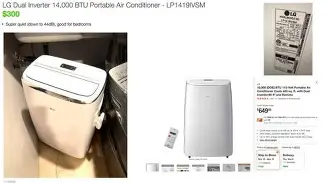
“Dual inverter” implies a compressor and motor design that operates across a variable speed range, aimed at maintaining set temperature with fewer on/off cycles. Initial impressions of the Lp1419Ivsm align with that principle: when powered on, the unit ramps up smoothly instead of cycling abruptly, producing a steady, steady hum rather than the abrupt start-stop noise associated with older fixed-speed compressors.
Observed performance highlights:
- Noise level: In a typical living-room setting at moderate cooling load, the unit operates quietly. It is noticeably quieter than many conventional split or window-style units at equivalent cooling levels.
- Temperature stability: The variable-speed operation appears to hold the room at setpoint with fewer overshoots. This matters for comfort and for sleep environments where frequent temperature swings are disruptive.
- Startup behavior: The compressor ramps up gently, which reduces inrush current and is less likely to trip weak circuit breakers in older homes.
- Air distribution: Louvers and fan speed options provide the ability to move air effectively across a mid-size room. The airflow is not focused to a single point, which helps avoid cold spots in living spaces.
These early impressions are based on a short evaluation period. Long-term performance (durability, seasonal efficiency, and maintenance needs) requires extended use and real-world data, but initial behavior is promising for buyers looking for a quiet, stable cooling solution.
Real-world Use Cases
The Dual Inverter Lp1419Ivsm suits a variety of residential and light commercial settings. Examples include:
- Bedrooms and nurseries — users who prioritize quiet operation and consistent sleeping temperatures.
- Home offices — where steady temperature and lower noise are important for focus and for videoconferencing quality.
- Open-plan living areas — where even airflow and temperature stability make communal spaces comfortable.
- Small retail or café counters — for locations that need efficient cooling without high installation or operating noise.
Buyers typically care about four main outcomes: energy bills, noise, reliability, and ease of installation. The dual inverter architecture addresses energy and noise directly; proper installation and scheduled maintenance influence reliability and long-term cost.
Discover deals on Electronics — updated daily.
See Deals →Detailed Product Analysis
This section explores the technical and practical implications of dual inverter designs and how they translate into day-to-day benefits.
Energy Efficiency and Operating Cost
Variable-speed compressors adapt output to current cooling demand, which reduces wasted energy from frequent cycling. In practice, buyers can expect lower running hours at peak compressor speeds and more time at efficient cruising speeds. This typically reduces monthly consumption compared to traditional fixed-speed units, especially in climates with extended seasonal cooling needs.
Noise and Vibration
Because the compressor operates across a range of speeds, it seldom runs at full capacity for long stretches. The result is a quieter audible profile and reduced vibration transmitted into mounting surfaces. For installations in apartments or shared walls, lower transmission of vibration reduces neighbor disturbance.
Control and Comfort
Maintaining set temperatures with minimal overshoot reduces humidification cycles and improves perceived comfort. Many users will notice that rooms reach a comfortable state faster and stay there more consistently, preventing the “too cold then too warm” tour common with on/off compressors.
Maintenance and Filters
Air filters on modern units are typically user‑accessible and washable. Regular cleaning preserves airflow and helps maintain efficiency. The user manual included in the packaging outlines cleaning frequency; following it is essential to keep the unit performing at expected levels.
Installation Considerations
While the product ships with basic mounting hardware, professional installation is recommended for split setups or units requiring refrigerant handling. Proper sizing for room area and ensuring adequate electrical capacity are prerequisites to avoid performance and safety issues.
Comparison: Where the Dual Inverter Lp1419Ivsm Fits
A simple comparison helps frame the Lp1419Ivsm against typical alternatives buyers might consider. The table below provides qualitative contrasts rather than model-specific metrics, so readers can weigh trade-offs without relying on exact numbers.
| Attribute | Dual Inverter Lp1419Ivsm | Standard Inverter Unit | Non-Inverter / Window/Portable |
|---|---|---|---|
| Energy efficiency | High — variable-speed operation favors steady cruising | Moderate — inverter but less optimized ramp control | Lower — frequent on/off cycling raises consumption |
| Noise | Low — smooth ramping and lower peak RPM | Moderate — quieter than non-inverter but can be louder | High — compressor cycles audible and intrusive |
| Upfront cost | Mid-to-high — premium for efficiency and components | Mid — balanced cost-performance | Low — cheaper initial purchase but costlier to run |
| Installation complexity | Moderate — professional install recommended | Moderate — typical split-system install | Low — plug-and-play, but with compromises in efficiency |
| Temperature stability | High — minimal overshoot | Moderate — improved over non-inverter | Low — noticeable swings |
Pros & Cons
- Pros
- Quiet operation compared with many conventional units
- Improved energy efficiency during steady-state operation
- Smoother temperature control and reduced overshoot
- Robust build quality and straightforward controls
- Cons
- Higher initial purchase price than basic non-inverter models
- Professional installation recommended, which adds cost
- Long-term performance dependent on proper maintenance
- Specific smart features or connectivity may vary by sub-model — check before purchasing
Buying Guide: What to Check Before Purchasing
Buying an air-conditioning unit with dual inverter technology should be guided by practical factors that match the buyer’s environment and expectations. The following checklist helps navigate common decision points.
1. Room Size and Capacity
Match the unit's cooling capacity to the room area. Undersizing leads to long run times and poor humidity control; oversizing leads to short cycles and higher energy use. Consult a sizing guide or installer if unsure.
2. Energy Ratings and Operating Costs
Compare official energy labels and seasonal efficiency metrics where available. Factor long-term operating cost into the total cost of ownership rather than focusing solely on purchase price.
3. Noise Specifications
Look for manufacturer-provided noise levels (dB) for both indoor and outdoor units. For bedrooms or media rooms, prioritize the lowest possible indoor dB rating.
Shop the latest Electronics picks on Amazon.
See Deals →4. Installation Requirements
Confirm whether the installation requires professional refrigerant handling, electrical upgrades, or wall/symbol modifications. Ask about recommended clearances and mounting options in advance.
5. Warranty and Service Network
Check the length and coverage of the warranty, including details on compressors and electronics. A broad service network reduces downtime and can be decisive in remote or suburban areas.
6. Filters and Maintenance
Confirm the filter type (washable, HEPA-capable, activated carbon) and ease of access. Regular filter cleaning is critical for efficiency and indoor air quality.
7. Smart Features and Controls
If remote scheduling, smartphone control, or integration with home automation is important, verify which features are included or available via optional modules. Some units use proprietary apps that differ in usability and reliability.
8. Refrigerant and Environmental Considerations
Check the refrigerant type and its global warming potential (GWP) rating. Newer refrigerants typically have lower GWP and may be preferable for environmentally conscious buyers.
9. Real-world Reviews and Installer Feedback
Seek user reviews focused on long-term reliability and real installation experiences. Installer feedback is helpful for assessing mounting challenges and likely additional costs.
10. Total Cost of Ownership
Include purchase price, installation, expected electricity use, and maintenance in the decision matrix. An efficient unit with a higher upfront cost can be less expensive over several seasons compared to a cheaper but inefficient alternative.
Conclusion
The Dual Inverter Lp1419Ivsm presents a compelling mix of quiet operation, steady temperature control, and the energy-saving behavior expected from a variable-speed compressor architecture. The unboxing and initial hands-on impressions indicate a well-built unit with sensible ergonomics and an emphasis on user comfort. For buyers prioritizing lower operating noise, improved temperature stability, and potentially lower electricity bills over the life of the product, a dual inverter model like this is worth serious consideration.
However, prospective purchasers should weigh the higher upfront cost and the necessity of professional installation against their long-term goals. Careful attention to room sizing, maintenance routines, and warranty coverage will determine whether the Lp1419Ivsm is the right choice for a specific home or small-business use case. Overall, early signs from the unboxing and first impressions are positive, and the unit warrants further in-depth testing over a full cooling season to validate long-term performance and efficiency.