Rokid Max 2 First Look: Unboxing and Impressions
Rokid's Max 2 arrives as a refreshed entry in the growing field of mixed-reality headsets aimed at creators, professionals, and enthusiasts who want a portable spatial computing experience. This first-look article walks through the unboxing experience, first impressions of hardware and software, real-world use cases, and the practical considerations buyers care about. Rather than a hands-off marketing summary, the piece takes an editorial approach focused on what matters day to day: comfort, display clarity, interaction paradigms, battery and mobility, content ecosystem, and whether the device will fit specific workflows.
Introduction: Where Rokid Max 2 Fits
Mixed reality devices are increasingly straddling two domains: immersive entertainment and practical productivity. The Rokid Max 2 positions itself closer to the latter, attempting to blend a compact, wearable form with features that appeal to remote collaboration, on-site visualization, and lightweight creative work. For people who travel, consult on location, or need a hands-free second display for applications such as CAD previews, design reviews, or spatial data visualization, a device like the Rokid Max 2 promises a different way of interacting with information.
This first look emphasizes impressions after unboxing and initial setup, highlighting what early buyers will notice immediately and what to test once they take the headset into the real world.
Unboxing and First Impressions
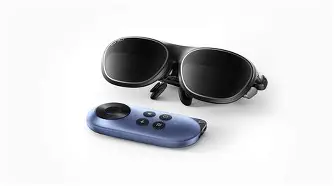
The packaging for the Rokid Max 2 is minimal and practical. Inside the box, buyers should expect the headset itself, a compact power adapter, a charging cable, a carrying case or protective fabric sleeve (depending on the bundle), and quick-start documentation. The unboxing experience leans toward a professional, utilitarian feel rather than flashy retail theater.
Out of the box, the headset feels solidly built. Rokid appears to have prioritized a balance of materials that keep the weight reasonable without feeling cheap. The headband design and face gasket are intended to be adjustable and wipeable. The initial out-of-the-box fit will vary by head shape, but the adjustment mechanisms—top strap, side tightening, and a forgiving face seal—help achieve a stable fit quickly.
Setup is straightforward: power on, follow the guided pairing and calibration steps, grant the necessary permissions, and let the headset apply available firmware updates. Rokid’s onboarding focuses on quick environmental scanning and hand/controller pairing. The whole process is approachable for users comfortable with smartphone accessory setup; users unfamiliar with headset ergonomics may need to spend extra time adjusting fit and IPD (inter-pupillary distance) settings.
Hardware and Build Quality
The Rokid Max 2’s hardware goal is clear: deliver a lightweight, mobile headset that still supports productive mixed-reality workflows. The plastic and metal mix for the chassis feels durable without being heavy. The face gasket is breathable and replaceable, an important consideration for professionals who share devices or wear them for multiple hour sessions.
Key hardware aspects worth noting during hands-on testing:
- Fit and comfort: The headband distributes weight across the skull, minimizing front pressure. For extended sessions, users should still test micro-adjustments to reduce slippage.
- Controls and inputs: The unit includes onboard buttons for basic control, a volume rocker, and reliable physical triggers for controller-style input. Built-in microphones and speakers support voice chat and spatial audio—acceptable for remote meetings and media playback.
- Ports and expandability: Charging and data ports are accessible and protected. The headset supports external accessories in some configurations, but buyers should verify compatibility with docks and adapters for their workflow.
Display, Optics, and Visual Experience
Rokid’s focus on display fidelity is aimed at clarity for text and UI-heavy applications rather than cinematic VR immersion. The visual experience is characterized by crispness for reading, decent color fidelity, and low-latency tracking for stable overlays. The headset projects virtual screens and AR overlays into the user’s field of view, making it useful for tasks like document review, virtual monitors, and markup during site walkthroughs.
Several real-world observations to test during early use:
- Legibility of small text and UI: check whether documentation and spreadsheets remain readable at comfortable viewing distances.
- Color and contrast for design work: evaluate whether the headset reproduces colors consistently compared to a calibrated laptop or monitor—important for designers and photographers.
- Brightness and outdoor usability: mixed-reality headsets vary significantly outdoors. Expect indoor workflows to be stronger than bright outdoor use unless the headset includes high-brightness passthrough improvements.
Tracking, Interaction, and Controls
Interaction with the Rokid Max 2 can involve a combination of hand tracking, controller input, voice commands, and gesture recognition. For many users, the practical value comes from hands-free workflows—navigating slides, annotating live video feeds, or consulting schematics while simultaneously using physical tools on site.
Initial impressions suggest the tracking is responsive for general navigation and selection tasks. Hand-tracking and gesture recognition work well in controlled lighting; edge cases such as fast gestures or complex finger articulations may still prefer a physical controller. For precision work, pairing a handheld controller or tethered input device remains the more reliable option.
Shop the latest Laptops & Computers picks on Amazon.
View Offers →Software, Ecosystem, and Productivity Apps
Rokid’s software ecosystem focuses on productivity and enterprise utilities rather than a large consumer game library. The base suite typically includes a virtual desktop app, remote meeting tools with spatial video/annotation, and developer APIs for building custom enterprise experiences. For buyers who need industry-specific workflows—field service, architecture, healthcare—evaluate whether Rokid or third-party developers provide the necessary integrations.
Considerations for real-world use:
- Compatibility with existing cloud services and collaboration platforms is crucial. Check whether the headset can connect to the remote desktop or visual collaboration tools already used by an organization.
- Developer support and SDK maturity: organizations planning custom apps will want stable SDKs, clear documentation, and sample code.
- App distribution and device management: enterprise buyers should verify provisioning, update delivery, and remote management capabilities.
Battery Life and Mobility
Battery life is always a trade-off between portability and performance. Rokid Max 2 targets a balance useful for on-the-go professionals: sufficient endurance for a full meeting, a site visit, or a creative session without forcing a mid-day recharge. Users who expect all-day use in the field should plan for a portable power bank or mobile charging strategy.
Thermals and power management are also notable. A well-designed thermal solution prevents hot spots around the face and keeps the device comfortable over longer sessions. Users performing heavy local processing (for advanced spatial mapping or AI-assisted features) should monitor heat buildup and adjust settings for extended uptime.
Audio and Microphone Quality
Onboard speakers deliver usable audio for video calls and system prompts; however, they won't match dedicated headphones for immersive media. The built-in microphones support clear voice capture during remote collaboration, with noise suppression helping in office or workshop environments. For privacy, professional users may choose to plug in a headset or use an external mic when recording sensitive audio.
Security, Privacy, and Enterprise Readiness
Buyers in regulated fields should evaluate the Rokid Max 2’s security posture: device encryption, secure boot, and enterprise management. If the device will capture images or video in sensitive places, verify data handling, on-device storage, and whether recordings can be configured not to leave the device without explicit user action.
Real-World Use Cases
The Rokid Max 2 is relevant to several practical scenarios:
- Remote field support: Technicians can stream a technician’s view to an expert, mark up live visuals, and receive step-by-step overlays while working with tools.
- Design review: Architects and product designers can place 3D models into a real environment to validate scale and proportions without printing or large physical mockups.
- Portable multi-monitor replacement: Knowledge workers can summon multiple virtual screens on flights or in small hotel rooms, reducing the need to carry extra displays.
- Training and simulation: Companies can deploy scenario-specific training modules that overlay instructions on physical equipment.
Pros & Cons
- Pros
- Comfort-oriented design for extended wear and adjustable fit.
- Clear, readable displays tailored to productivity tasks and virtual monitors.
- Flexible input options—hand tracking, controllers, and voice—for different workflows.
- Enterprise-friendly focus with tools for remote assistance and spatial collaboration.
- Reasonable portability that fits mobile professionals and field workers.
- Cons
- Smaller app ecosystem compared with mainstream consumer platforms—may limit entertainment options.
- Outdoor or very bright-environment performance can be constrained by display brightness and passthrough limitations.
- Battery life, while practical for meetings or site visits, may require external power for all-day intensive workflows.
- Precision-heavy tasks may still favor handheld controllers or tethered input devices over hand tracking.
Comparison Table
| Feature | Rokid Max 2 | Typical Alternative (e.g., general-purpose MR/AR headset) | Why It Matters |
|---|---|---|---|
| Target Use | Productivity & enterprise mixed reality | Consumer entertainment or general XR | Determines whether the device is optimized for apps like remote assistance or immersive games |
| Comfort | Balanced for extended wear | Varies—some favor visual fidelity over comfort | Comfort affects session length and user adoption |
| Display Focus | Readable text and virtual monitors | Immersion and cinematic visuals | Different priorities for enterprise vs. consumer use cases |
| Input Methods | Hand tracking, controllers, voice | Controller-centric or hand-only | Affects precision and ease of interaction for tasks like annotation |
| Software Ecosystem | Enterprise/SDK-driven | Large consumer app stores | Availability of apps influences out-of-the-box usefulness |
| Mobility | Portable, battery-powered | Some require tethering to PC | Mobility affects field use and travel convenience |
Buying Guide: What to Consider Before Buying Rokid Max 2
Anyone considering the Rokid Max 2 should evaluate their specific needs against a short checklist. The following items help determine whether this headset is a fit for an individual or organization.
1. Primary Use Case
Define whether the headset will be used mainly for remote collaboration, design review, portable virtual monitors, training, or entertainment. Rokid Max 2 targets productivity-focused workflows; if entertainment and gaming are primary, a consumer-focused headset may be a better match.
2. Software and Integration
Confirm that essential software (remote meeting platforms, CAD viewers, custom enterprise tools) either runs natively on the device or can be accessed via a supported remote desktop solution. For bespoke workflows, validate the availability and maturity of SDKs and developer support.
3. Comfort and Fit
Try to test the headset for 30–60 minutes before committing when possible. Check adjustability, balance on the head, and whether eyewear can be comfortably worn with the device. Consider replacement face gaskets if hygiene or shared-device scenarios are expected.
Shop the latest Laptops & Computers picks on Amazon.
See Deals →4. Battery & Mobility Needs
Estimate how long the headset will be used continuously. For occasional meetings, onboard battery life may be adequate. For extended fieldwork, arrange for portable charging options or plan sessions around recharge windows.
5. Connectivity and Peripheral Support
Verify wireless and wired connectivity options and whether the headset can interface with existing peripherals (external microphones, headphones, specialized controllers). For on-site use, test how the device handles spotty Wi-Fi and whether cellular tethering is supported.
6. Privacy and Security Requirements
For regulated industries, investigate device encryption, access controls, and how captured media is stored and transmitted. Ask whether recordings can be restricted to on-device storage or centrally managed via an enterprise console.
7. Total Cost of Ownership
Beyond the purchase price, factor in accessories (cases, spare face gaskets, controllers), potential software subscriptions, developer integration costs, and training for staff. Enterprise deployments should model the cost of provisioning and ongoing device management.
8. Trial and Support
Seek demo units, pilot programs, or trial periods if possible. Confirm warranty terms, available support channels, and whether local service centers exist for larger deployments.
How Buyers Typically Use and Evaluate it
Different buyers evaluate the Rokid Max 2 against distinct priorities:
- IT and procurement: Focus on manageability, security, and integration into enterprise systems.
- Field technicians: Value hands-free overlays, robust remote assistance, and ruggedness.
- Design professionals: Look for accurate scale, color consistency, and multi-window productivity.
- Trainers and educators: Seek repeatable scenarios, low friction setup for groups, and reliable tracking for demonstration fidelity.
Across these groups, the most common concerns are app availability, ease of integration, and whether the device meaningfully speeds up tasks compared with existing tools (laptops, tablets, or paper drawings). A headset is most compelling when it reduces context switching—keeping hands free while overlaying actionable information in the user’s environment.
Conclusion
The Rokid Max 2 makes a persuasive case for professionals seeking a portable mixed-reality device tailored to productivity workflows. Its focused design—comfort, readable displays, and an enterprise-oriented software approach—positions it as a practical tool for remote assistance, design review, and mobile productivity. As with any early-adopter hardware, buyers should align expectations with intended workflows: verify app compatibility, evaluate comfort over realistic session lengths, and plan for charging and device management in larger deployments.
For those whose daily work involves frequent collaboration across distances, on-site visualization, or the need to overlay instructions and schematics in the real world, the Rokid Max 2 is worth a closer look. For buyers prioritizing a broad consumer app library or cinematic immersion, other devices may still be the better fit. Ultimately, the Rokid Max 2 shines as a focused tool—one that demands hands-on testing against specific workflows before a purchasing decision is finalized.